



Table of Contents
ToggleChilde (also known as Tartaglia) stands as one of Genshin Impact’s most versatile and rewarding DPS characters since his debut in Version 1.1. Whether you’re a seasoned player looking to optimize his damage or a newer adventurer curious about what makes him tick, this guide digs into exactly what you need to know. With multiple viable build paths, exceptional team synergies, and gameplay mechanics that demand precision, Childe rewards players who master his kit. We’ll break down his abilities, explore the best weapons and artifacts, walk through team compositions that actually work, and share combat tips that’ll elevate your performance. By the end, you’ll understand not just how to build Childe, but when and why to use him in different scenarios.
Key Takeaways
- Childe’s dual-stance mechanic and Riptide passive make him one of Genshin Impact’s most versatile DPS characters, excelling in Hydro, Physical, and support-focused builds depending on team composition.
- The Hydro DPS build paired with off-field applicators like Fischl or Xingqiu in Hyperbloom and Vaporize teams represents Childe’s strongest 2026 meta configuration for Spiral Abyss and endgame content.
- Managing Childe’s 30-second melee cooldown strategically—marking multiple enemies with Riptide before bursting and swapping to supports during downtime—is essential for maximizing sustained damage output.
- Heart of Depth artifacts, Polar Star or The Stringless weapons, and stat targets of 1800–2100 ATK with 50–70% Crit Rate form the optimal build foundation for Hydro Childe.
- Proper energy economy (100–120% ER), team positioning around support cooldowns, and animation canceling through weapon swaps are advanced mastery techniques that unlock significant damage improvements.
- Childe’s flexibility ensures long-term viability regardless of meta shifts, making him a worthwhile long-term investment for players tackling both challenging Abyss runs and casual overworld exploration.
Who Is Childe? Character Overview and Role
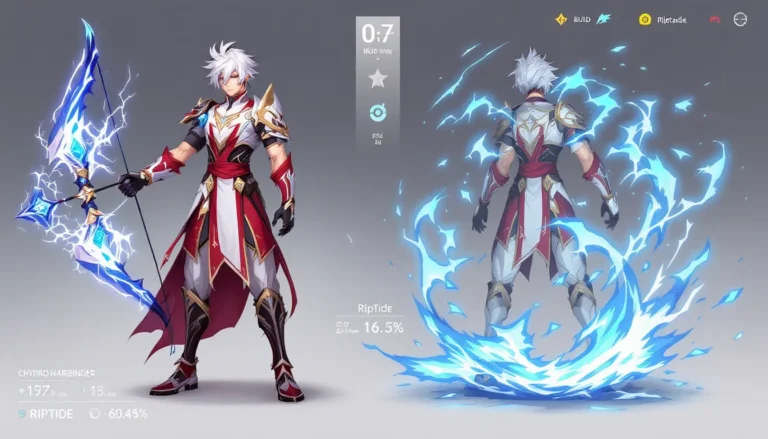
Childe is a 5-star Hydro bow user with a unique dual-stance mechanic that sets him apart from most DPS characters. In the story, he’s the 11th Fatui Harbinger and a surprisingly charismatic antagonist-turned-ally. From a gameplay perspective, Childe excels as a main DPS in both on-field and off-field roles, depending on your build and team composition.
His defining feature is his Foul Legacy: Raging Tide Elemental Skill, which transforms his attack pattern into a melee stance where he wields twin daggers infused with Hydro. This mechanic forces you to manage a cooldown timer, making Childe feel more active and engaging than passive bow users. His damage ceiling is genuinely high, when built correctly and paired with enabling supports, he rivals or exceeds many meta DPS characters.
What makes Childe special is his flexibility. Unlike some characters pigeon-holed into one role, Childe functions as a burst window DPS, a sustained physical attacker, or even an off-field Hydro applicator depending on your needs. This adaptability means your investment in him won’t feel wasted if the meta shifts or you need to rebuild teams around new characters. Ajax Genshin Impact: Unleash provides another detailed perspective on his Fatui counterpart, but Childe’s own kit has evolved significantly through multiple reruns and patches.
Childe’s Abilities and Skill Mechanics
Normal and Charged Attacks
Childe’s normal attacks in his bow stance fire arrows in a straightforward manner. Nothing flashy, they’re solid for applying Hydro at range. His charged attack is where bow users typically shine, and Childe’s is no exception: it deals Hydro damage and can be aimed for precision. The charged attack scales with his ATK stat and benefits from elemental damage bonuses.
But, the real game-changer happens when you enter his melee stance. Once in Foul Legacy mode, normal and charged attacks shift to rapid-fire dagger strikes. These attacks hit multiple times, apply Hydro consistently, and scale with ATK just like the bow attacks. The melee stance feels incredibly satisfying and deals noticeably more damage per second than his bow form, which is the entire point.
Elemental Skill: Foul Legacy Raging Tide
This is Childe’s bread and butter. Activation triggers his transformation into melee mode, and he gains the following benefits:
- Switches his attack pattern to rapid dagger strikes
- Extends his attack range and increases DPS significantly
- Applies Hydro on every hit
- Gains Riptide status, which triggers additional off-field damage when foes take attacks
The cooldown mechanic is crucial: you get roughly 30 seconds of melee time before the skill forces a cooldown of 6 seconds. During the cooldown, you return to bow form. This timer isn’t a bug, it’s intentional design that encourages team rotations. Good players use this downtime to swap to other characters for elemental reactions while Childe sits off-field as a Hydro applicator.
Riptide is Childe’s hidden power. When enemies marked with Riptide are hit by other party members’ attacks or when Riptide stacks expire, they trigger an explosion dealing Hydro damage to nearby foes. This off-field damage adds up, especially in multi-enemy scenarios. Upgrading this talent directly increases Riptide damage.
Elemental Burst: Havoc Obliteration
Childe’s Elemental Burst is a flashy but straightforward attack: he jumps into the air and unleashes a massive slash that deals Hydro damage in a wide AoE. If enemies are marked with Riptide when hit by the burst, the explosion triggers immediately and deals additional damage.
The burst doesn’t regenerate energy during his melee cooldown, so timing matters. Most players activate the burst during melee stance when Riptide stacks are high, or use it during the cooldown window to maintain pressure. The damage scales with ATK and Hydro Damage Bonus, making it hit especially hard when built for Hydro offense. With proper artifact investment, this burst can cleave groups of enemies and deal impressive single-target numbers.
Optimal Build Paths for Different Playstyles
Childe’s flexibility means there’s no single “correct” build. Here are the three most viable approaches depending on your team and goals.
Physical DPS Build
The physical Childe build focuses on his normal attack damage in both bow and melee stances. This approach is less common in 2026 but still viable, especially in overworld content.
Stat Priorities:
- ATK: 1800–2000 (base requirement)
- Physical Damage Bonus: 30–50% (from artifacts and weapon)
- Critical Rate: 50–70%
- Critical Damage: 120–180%
Playstyle: Activate melee stance, spam normal attacks, and let Riptide damage chip away at groups. You’ll output sustained damage but lower burst windows than Hydro-focused builds.
When to use it: Overworld content, domains without Hydro-resistant enemies, and if you lack supports for Vaporize or Hyperbloom.
Hydro DPS Build
This is the meta Childe build in 2026. It maximizes Hydro damage output and synergizes with reaction-heavy teams like Vaporize and Hyperbloom compositions. This approach turns Childe into a true burst window DPS.
Stat Priorities:
- ATK: 1800–2100
- Hydro Damage Bonus: 40–50% (crucial)
- Critical Rate: 50–70%
- Critical Damage: 120–180%
- Energy Recharge: 100–120% (to burst off-cooldown)
Playstyle: Build for maximum Hydro damage, activate melee stance, and coordinate with supports to trigger reactions. Your burst becomes a nuke, and Riptide explosions benefit from Hydro bonuses.
When to use it: Spiral Abyss, challenging domains, and any content where reactions matter. Pair with Pyro (Vaporize) or Electro (Hyperbloom) supports.
Support and Utility Build
Some players build Childe as a sub-DPS or off-field Hydro applicator, investing in Elemental Mastery and Energy Recharge instead of pure ATK.
Stat Priorities:
- Energy Recharge: 140–160%
- Elemental Mastery: 200–400 (for reaction damage)
- ATK: 1200–1500
- Hydro Damage Bonus: 20–30%
Playstyle: Use Childe as a rotation character who applies Hydro and triggers reactions, then swap to another DPS. His Riptide becomes the focus, not his personal damage.
When to use it: Teams built around another main DPS (like Fischl or Nahida) where Childe’s Hydro application and reactions matter more than his on-field time. Genshin Impact Kuki: The characters often synergize with this support Childe role in Hyperbloom teams.
Best Weapons and Artifacts for Childe
Top Recommended Weapons
5-Star Options:
- Polar Star: The best-in-slot for Hydro Childe. It provides ATK and grants stacking ATK buffs as you trigger reactions. The weapon passive synergizes perfectly with Childe’s rapid attacks.
- Thundering Pulse: Another solid alternative if you don’t have Polar Star. It boosts Charged Attack damage and gives passive ATK buffs on crit hits.
- Aqua Simulacra: Hydro-exclusive weapon that increases ATK and elemental damage. Works well if you’re running Childe as a main DPS.
4-Star Options:
- The Stringless: If you’re building for Riptide damage, this is your budget king. It directly buffs Elemental Skill and Burst damage by 24%–48%.
- Prototype Crescent: Solid ATK stat and pairs well with physical Childe builds. The ATK buff on charged hit headshots is a nice bonus.
- Sacrificial Bow: Grants Energy Recharge and can reset Childe’s cooldown on-hit (though rare). Useful for support-focused builds.
Practical Recommendation: If you’re running Hydro DPS Childe in Vaporize or Hyperbloom, Polar Star or The Stringless will serve you best. For overworld and casual content, any 4-star bow with ATK/ER substats works fine.
Artifact Sets and Stat Priorities
Best Sets for Hydro DPS:
- Heart of Depth (4-piece): The standard choice. Grants 15% Hydro damage outright, and the 4-piece bonus boosts Normal and Charged Attack damage by 30% after triggering a Hydro reaction. This is arguably his best set.
- Viridescent Venerer (2-piece) + Heart of Depth (2-piece): If you’re running Hydro DPS and want flexibility, this hybrid approach gives 15% Hydro damage from both sets. Less spiky than full Heart of Depth but more forgiving.
- Noblesse Oblige (4-piece) + Heart of Depth (2-piece): If your team needs the burst damage buff, this works. You sacrifice some personal damage for team support.
Sets for Physical Childe:
- Bloodstained Chivalry (4-piece): Grants 25% physical damage and buffs charged attack damage. Straightforward and effective.
- Pale Flame (4-piece): Another physical option. Provides physical damage and stacking ATK buffs after hitting opponents with charged attacks.
Artifact Stats (Mainstats):
| Slot | Stat |
|---|---|
| Sands | ATK% |
| Goblet | Hydro Damage Bonus% (or Physical% if physical build) |
| Circlet | Crit Rate% or Crit Damage% (depending on current ratio) |
Substats Priority:
- Critical Rate: Aim for 50–70% total
- Critical Damage: Aim for 120–180% total
- ATK%: 15–25% total from substats
- Energy Recharge: 100–120% total (especially important if using The Stringless)
Why These Stats Matter: Childe’s damage scales quadratically with crit stats and ATK. Even small improvements to crit rate or ATK% translate to noticeable damage increases. Energy Recharge matters because his burst is a significant damage window, falling short on ER means delayed bursts, which costs DPS.
Best Team Compositions and Synergies
Childe’s flexibility means he slots into multiple team archetypes. Here are the three most effective team structures in 2026.
Hyperbloom and Vaporize Teams
Childe + Kazuha + Bennett + Fischl (Hyperbloom):
This is arguably Childe’s strongest 2026 team composition. The synergy is straightforward: Childe applies Hydro, Fischl applies Electro off-field, and Kazuha boosts both elements. Bennett provides ATK and healing.
- Childe’s Role: Main DPS with melee stance damage and Riptide
- Fischl’s Role: Off-field Electro application (especially with C6 or A6)
- Kazuha’s Role: Elemental damage buffer for both Hydro and Electro
- Bennett’s Role: ATK buff, healing, and Pyro for overload procs
Rotation example: Bennett E → Fischl E → Kazuha E+Q → Childe E+Q+Normal Attacks → Repeat.
Childe + Xingqiu + Bennett + Kazuha (Vaporize):
Classic vaporize Childe setup. Xingqiu applies Hydro off-field, allowing Childe to trigger Vaporize reactions with his attacks.
- Childe’s Role: On-field DPS
- Xingqiu’s Role: Off-field Hydro application and damage reduction
- Bennett’s Role: ATK buff and Pyro for vaporize triggers
- Kazuha’s Role: Elemental damage buffer
This team has been meta since Childe’s release and remains viable in 2026. The sustained reaction damage is excellent for single-target scenarios.
Freeze and Control Teams
Childe + Shenhe + Kazuha + Kokomi (Freeze):
Freeze Childe is underrated. While he’s not a traditional cryo applier, Childe pairs exceptionally well with cryo-focused supports. The freeze lock enables massive burst damage windows.
- Childe’s Role: Main DPS and crowd control
- Shenhe’s Role: Cryo damage buff and DEF shred
- Kazuha’s Role: Additional damage buff
- Kokomi’s Role: Off-field Hydro application and healing
The advantage here is crowd control, frozen enemies can’t retaliate, making this composition safer for challenging content.
Off-Field Support Configurations
Childe doesn’t always need to be the main DPS. Some teams benefit from using him as a sub-DPS:
Fischl or Nahida Hyperbloom Core with Childe Support:
In this configuration, Nahida or Fischl drives the team, and Childe provides on-demand Hydro application. This works when your main DPS needs consistent elemental reactions.
- Childe’s Role: Sub-DPS, Hydro applicator, occasional burst window
- Main DPS’s Role: Primary damage dealer
- Supports: Optimize around the main DPS
This approach is situational but useful when tackling content with specific weakness patterns. According to gaming resources like IGN’s game guides, understanding character flexibility in different roles is key to building effective teams for varied endgame content.
Talent Priority and Ascension Materials
Talent investment dictates Childe’s damage output. Here’s what to prioritize.
Talent Upgrade Order:
- Elemental Skill (Foul Legacy: Raging Tide): Priority #1. This ability is his main DPS tool. Leveling it increases dagger attack damage and, critically, Riptide damage. Each level matters significantly.
- Elemental Burst (Havoc Obliteration): Priority #2. His burst is a major damage window and the only tool that scales with Hydro Damage Bonus in a meaningful way. Level this next.
- Normal Attacks: Priority #3. Important for sustained damage, but less critical than his skill and burst.
Talent Level Targets:
For endgame Spiral Abyss content, aim for:
- Elemental Skill: Level 9–10
- Elemental Burst: Level 8–9
- Normal Attacks: Level 8–9
For casual content, Level 6–8 across all three talents is sufficient.
Ascension Materials:
Childe requires the following to fully ascend to Level 90:
- Divining Scroll (Common): 18 total (various levels)
- Sealed Scroll (Uncommon): 30 total
- Forbidden Curse Scroll (Rare): 36 total
- Fatui Insignia (Elite): 18 total
- Gilded Sigil (Weekly Boss): 6 total (drops from Childe’s own boss fight)
- Varunada Lazurite (5-Star Gem): 1 total
Collecting these materials requires grinding “Old Nobles” and “Fatui” enemies in Liyue, plus weekly runs against Childe’s Childe-Hydro Hypostasis boss fight in the Golden House. Most players farm materials over 2–4 weeks depending on resin efficiency.
Crown of Insight: If you have spare crowns, prioritize maxing his Elemental Skill talent to Level 10. This gives the highest damage return for a crown investment compared to his other talents.
Tips for Mastering Childe in Combat
Childe’s kit rewards positioning, timing, and team coordination. Here are actionable tips to elevate your gameplay.
1. Manage Your Melee Cooldown Strategically
Don’t feel pressured to use the entire 30-second melee window every rotation. Against single targets, aggressive play is fine. But in multi-enemy scenarios (like Abyss), consider swapping off after 15–20 seconds to apply Riptide to multiple foes, then let your supports trigger off-field reactions while Riptide damage processes. This isn’t less effective, it’s smarter.
2. Stack Riptide Before Bursting
Before activating your Elemental Burst, mark as many enemies as possible with Riptide. Childe’s burst triggers massive explosions on Riptide-marked targets. A burst hitting 5 Riptide-marked enemies deals significantly more damage than hitting 1 or 2. In Abyss, this difference is the gap between clearing quickly and struggling.
3. Animation Cancel with Weapon Swap
This is an advanced technique: after hitting enemies with a charged attack in melee stance, immediately swap to another character. This cancels Childe’s endlag and lets your swap happen faster. It’s not essential but shaves a few frames off your rotation, which matters in speedrunning contexts.
4. Play Around Bennett’s Burst Circle
If Bennett is in your team, position Childe inside Bennett’s burst circle for the ATK buff. The buff window is roughly 12 seconds, make sure Childe’s melee stance overlaps significantly with it.
5. Fischl Positioning in Hyperbloom
If using Hyperbloom Childe with Fischl, keep Childe close to enemies so his attacks stay within Fischl’s off-field range. Fischl’s turret and coordinate attacks have limited range. Poor positioning means fewer off-field hits and less Dendro core generation.
6. Watch Your Energy Economy
Childe doesn’t generate much energy during his melee cooldown (6 seconds). Make sure your build includes enough ER (100–120%) and that your supports provide energy via their abilities (like Fischl’s E) or weapons (like Sacrificial Bow). Running out of burst energy mid-rotation tanks your DPS hard.
7. Recognize When to Extend or Shorten Melee Time
Against tankier enemies (like elite bosses), extending your melee time and landing more attacks is worth the cooldown. Against groups (like Abyss waves), shorter melee windows let you mark more foes with Riptide before swapping to supports who trigger reactions. Adapt based on enemy count and health pool.
8. Dodge During Cooldown Windows
Childe’s melee cooldown (those 6 seconds in bow form) is your safest window to dodge or reposition. Use it proactively to avoid incoming damage, then re-enter melee mode refreshed. This is especially true in challenging content where enemy attacks are unavoidable.
9. Use Charged Attacks Sparingly in Melee
In melee stance, normal attacks generate much more DPS than charged attacks. Charged attacks consume stamina and lock you into recovery animations. Spam normals unless you need a specific hitstun or positioning adjustment. Game Rant’s game guides often emphasize similar optimization tactics for character rotations.
10. Test Different Rotation Timings
Team synergy depends on cooldown alignment. A 15-second melee window might work better than a 25-second one depending on whether your supports’ abilities are off-cooldown. Spend 10 minutes in a domain or overworld testing different rotation speeds to find your optimal rhythm for specific team compositions.
Conclusion
Childe is a character that rewards mastery. Unlike some DPS units where you simply equip them and attack, Childe demands understanding of cooldown management, team synergy, and positioning. But that investment pays dividends, he’s been meta for four years running and shows no signs of falling off in 2026.
The core takeaway: build him for Hydro DPS with Heart of Depth artifacts, pair him with off-field applicators like Fischl or Xingqiu, and respect his melee cooldown as a strategic tool rather than a limitation. Whether you’re tackling Spiral Abyss or exploring Teyvat, Childe’s versatility ensures he fits into multiple team archetypes.
If you’re considering pulling for him on a future rerun, understand that you’re investing in one of the most flexible DPS units available. And if you already have him built but struggle with certain content, revisit your team composition and rotation timing, small adjustments often unlock massive damage improvements. Keep optimizing, and you’ll see why Childe remains one of Genshin Impact’s most compelling characters. For additional character insights and build strategies, resources like Twinfinite’s walkthroughs provide valuable perspectives on Genshin’s broader roster and synergy options. And if you want to explore the broader Genshin universe, Hot Genshin Impact Characters: Discover explores the diverse cast that makes the game special.