Table of Contents
ToggleGenshin Impact has captivated millions of players with its vibrant world, engaging characters, and stunning art direction. If you’ve found yourself mesmerized by the game’s visual style and want to learn how to draw Genshin Impact characters yourself, you’re not alone. The colorful designs, dynamic poses, and intricate clothing of characters like Hu Tao, Kazuha, and Nahida make them compelling subjects for artists at every skill level. Whether you’re a casual doodler picking up a pencil for the first time or an experienced artist looking to refine your style, this guide will walk you through the fundamentals and advanced techniques needed to capture the essence of Teyvat’s heroes on paper or screen.
Key Takeaways
- Genshin Impact drawing characters is achievable at any skill level because they balance realistic anatomy with stylized anime features, making them perfect practice subjects for artists seeking to improve fundamentals.
- Master the 7–8 head proportion system and consistent facial feature placement—large expressive eyes, minimalist noses, and cool-toned shadows—to authentically capture the game’s visual style.
- Start your Genshin Impact drawing journey with simpler characters like Lumine or Amber, using light construction lines and blocking shapes before adding details like clothing, hair, and accessories.
- Elevate your artwork by varying poses, adding atmospheric backgrounds layered with depth, and using clean shine lines on hair and highlights on eyes to achieve the polished, vibrant aesthetic of official art.
- Avoid common pitfalls like ignoring proportions, using brown or black shadows instead of cool tones, and forgetting character-defining features; consistent practice and community feedback accelerate skill development more effectively than sporadic efforts.
Why Genshin Impact Characters Are Perfect For Drawing Practice
Genshin Impact characters stand out as ideal subjects for artists because they combine anatomical accuracy with stylized design choices. The game’s art team at miHoYo carefully balances realistic proportions with anime-influenced features, creating characters that are challenging enough to improve your fundamentals but stylized enough to feel forgiving if proportions aren’t pixel-perfect.
Each character has a distinct silhouette and personality that translates visually. Unlike realistic portrait work, which demands subtle accuracy, Genshin characters reward you for understanding their defining features: Fischl’s raven Oz, Venti’s ethereal blonde hair, or Ayaka’s elegant ice-blue eyes. This makes the drawing experience more enjoyable because you’re learning to identify and emphasize character traits rather than copying every pixel.
Another reason these characters work well for practice is the abundance of reference material. Official artwork, in-game models, fan art, and promotional materials are everywhere, giving you endless reference options. You can study how different artists interpret the same character, which accelerates your learning curve. Plus, the community actively shares drawing progress, which provides motivation and constructive feedback opportunities.
The variety in character types, slim fighters, muscular warriors, petite mages, forces you to develop flexibility in your anatomy skills. You won’t get stuck in one pose type or body proportion. The diverse cast in Genshin Impact official art demonstrates this range beautifully, offering genuine educational value for studying different silhouettes.
Essential Tools And Materials For Drawing Genshin Impact Art
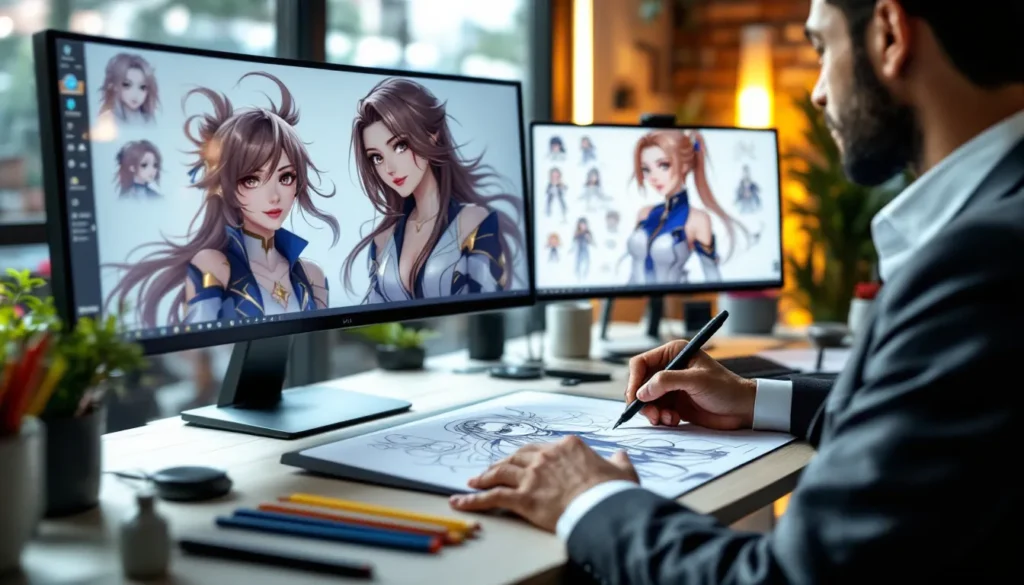
Your toolkit depends on whether you’re going digital or traditional, but the fundamentals remain the same: you need something to draw with and something to draw on. Let’s break down both paths.
Digital Drawing Tools And Software
If you’re drawing digitally, you’ll need a device (PC, Mac, iPad, or tablet) and drawing software. Clip Studio Paint is the gold standard for character art and anime-style work, offering brush engines specifically tuned for illustration. It’s used by professional manga and anime studios, so you’re learning with industry-standard tools. A single license costs around $50, and it’s worth every penny for serious artists.
Procreate ($12.99 one-time on iPad) is fantastic if you prefer iOS. It’s incredibly intuitive and has massive brush variety. Krita is a free, open-source alternative that punches well above its price point, it’s legitimately professional-grade software. Photoshop works, but it’s overkill for character drawing and unnecessary unless you already use it for other work.
You’ll also want a drawing tablet or stylus. A Wacom One tablet (around $30–60) is perfectly adequate for beginners. If you’re using iPad, the Apple Pencil is essential for precision. For PC or Mac tablets, higher-end options like Wacom Pro or XP-Pen tablets offer more pressure levels and better responsiveness, but they’re not necessary starting out.
Take advantage of online resources, gaming sites often showcase character art techniques that you can study and apply to your Genshin drawing practice.
Traditional Art Supplies For Genshin Impact Sketches
Traditional media remains powerful for character drawing. Start with mechanical pencils (0.5mm or 0.7mm) for clean linework and regular HB or 2B graphite pencils for shading. Paper matters more than you’d think, grab a mixed-media pad or bristol board (smooth surface, 100+ gsm weight). Cheap notebook paper degrades quickly under erasing and shading.
Colored pencils are ideal if you want color without the learning curve of paints. Brands like Caran d’Ache or Faber-Castell offer professional pigmentation without very costly. If you prefer markers, Copic markers are the industry standard but pricey: Tombow Dual Brush pens are an excellent budget alternative.
For shading, invest in a good eraser set: a kneaded eraser for lifting highlights and a regular eraser for corrections. A blending stump or tortillon (around $3–5) helps you smooth graphite shading for softer transitions, essential for achieving the polished look of Genshin characters.
A light box or lightpad (around $20–50) is helpful for transferring sketches without redrawing everything. Tracing over your initial sketch lets you refine proportions without starting from scratch.
Understanding Genshin Impact Character Design And Anatomy
Before you start drawing, you need to understand the anatomy foundation that Genshin artists use. The game’s style isn’t randomly stylized, it follows consistent rules about proportions, balance, and feature placement.
Common Character Proportions And Body Types
Most Genshin characters follow a 7–8 head tall proportion system. This means the character’s total height equals about 7–8 times their head height. This is different from realistic anatomy (which is 7.5–8 heads) but close enough that understanding realism gives you a foundation. Here’s the breakdown:
- Head: The top of the skull to the chin
- Chest: From shoulders to lower ribs (roughly 1.5 head heights)
- Waist: Narrower section between ribs and hips (0.5 head heights)
- Hips/Legs: From the waist to mid-knee (about 3 head heights)
- Lower legs and feet: Knee to ground (about 2 head heights)
Genshin characters come in distinct body types even though following these proportions. Tall female characters like Ayaka and Ei have elongated proportions and narrower shoulders. Petite female characters like Klee and Diona compress the same proportions into smaller frames, so their heads appear slightly larger relative to body size. Male characters tend toward broader shoulders and more defined musculature.
The key is that relative proportions stay consistent even when the overall height changes. A small character’s head isn’t proportionally larger out of carelessness, it’s intentional stylization. When you’re drawing, use light construction lines to establish these proportions before adding details. Draw a center line for symmetry, mark where the midpoint falls, and establish head height before adding facial features.
Facial Features And Expression Techniques
Facial features are where Genshin characters come alive. The eyes are disproportionately large compared to realistic anatomy, this is classic anime style and integral to the character’s appeal. Eyes typically occupy about 1/3 of the face width, with spacing equal to one eye width between them.
Eye construction follows a formula: a rounded outer shape, an iris that fills about 60–70% of the eye opening, a smaller pupil, and highlights that bring them to life. The top eyelid curves gently downward, while the bottom eyelid is thinner. Eyelashes are subtle on male characters but prominent on female characters, thick upper lashes are signature Genshin. Add a small triangle of shadow under the eye to push it forward.
The nose in Genshin art is minimalist: just a small line or slight shading indicates the bridge and tip. Noses don’t have defined shapes like in realistic drawing. This simplification lets the eyes dominate the face.
Mouth placement sits about 1/3 of the way from nose to chin. Genshin mouths are typically small, with a defined lower lip and subtle upper lip. Smiles curve from the corners upward naturally. Expressions come from eyebrow placement and eye shape more than mouth movement, arched eyebrows suggest confidence, lowered brows suggest concern.
For skin tone shading, use soft shadows on the cheeks, jawline, and neck. Genshin characters benefit from subtle blush on the cheeks, it’s a signature of the style. Shadows should be cool-toned (slight purple or blue undertones) rather than brown, which feels heavy.
Hair deserves special attention because it’s often the most visually striking element. Instead of drawing individual strands, think in terms of hair clusters or sections. Group strands together, establish the overall shape first, then add shine lines and depth. Hair in Genshin art has clean, defined edges with distinct sections, it’s not realistic but graphically appealing.
Step-By-Step Guide To Drawing Your First Genshin Impact Character
Now let’s put theory into practice. Choose a relatively simple character to start, someone like Lumine, Aether, or Amber. Avoid overly complex designs initially (save Fischl’s Oz or Zhongli’s elaborate robes for later).
Creating Basic Sketches And Proportions
Step 1: Set up construction lines. Lightly sketch a vertical center line for symmetry. Mark the head height near the top, this becomes your unit of measurement. Make tick marks for the proportions: roughly one mark per head height going downward. Your 7-head-tall character should have tick marks at head, chest, waist, mid-hip, lower hip, knee, and ankle.
Step 2: Block in the head. Draw a circle for the cranium and a smaller wedge shape below for the jaw and chin. The total head height spans from the circle’s top to the tip of the chin. Don’t worry about perfect symmetry, rough shapes work fine at this stage.
Step 3: Establish the body structure. Using your proportion marks, sketch simple shapes for the torso (rectangle or trapezoid), hips (slightly narrower or wider depending on character), and legs (cylinders or tapered rectangles). Keep these shapes loose and gestural, you’re building a skeleton, not the final form.
Step 4: Position the arms. Arms typically reach to mid-thigh when relaxed. Sketch them as simple cylinders with joints marked at shoulder, elbow, and wrist. If your character is in a dynamic pose, bend the arms at the elbows and rotate the overall shape.
Step 5: Refine the silhouette. Once the basic shapes are in place, lightly erase or adjust to create a smoother, more natural outline. The character’s silhouette should be instantly recognizable even without details. This is where character personality starts showing.
Keep your pencil pressure light during this phase. You’re solving compositional problems, not creating finished artwork. Mistakes are easy to fix if you haven’t committed to dark lines.
Refining Details And Adding Clothing Elements
Step 6: Define facial features. Using your guidelines (proportions marked on the head), lightly sketch where the eyes go (roughly 1/3 down the face, spaced one eye-width apart). Mark the nose position (center line, about 2/3 down). Place the mouth about 1/3 of the way between nose and chin.
Sketch basic shapes for eyes before refining them. Draw the irises, pupils, and highlights. Add eyebrows above the eye line. The expression emerges as these elements come together, spend time here because it makes or breaks the character.
Step 7: Add hair structure. Before detailing individual hair strands, sketch the overall hair volume and direction. Identify major sections (bangs, sides, back). Genshin characters often have distinctive hairstyles, studying how different artists interpret character appearances can guide your approach. Block in hair color areas and major shadow shapes.
Step 8: Sketch clothing. This is where Genshin characters get interesting. Lightly outline the basic clothing shapes and fold patterns. Don’t draw every wrinkle yet, just establish where fabric bunches and flows. Pay attention to how fabric interacts with the body: tight cloth clings to curves, loose fabric drapes and flows.
Step 9: Darken your linework. Once proportions and placement feel right, begin inking or darkening your pencil lines with confident strokes. Follow the contours of the character, varying line weight (thicker lines on outer edges, thinner lines where forms connect). This is when your rough sketch transforms into recognizable artwork.
Coloring And Shading Techniques
Step 10: Establish base colors. If working traditionally with colored pencils or markers, apply light base colors first. Use mid-tone values, you’ll add darker shading and highlights afterward. If working digitally, create separate layers for different elements (skin, hair, clothing) so you can adjust them independently.
Step 11: Build shading systematically. Identify your light source (top-left is common for Genshin-style art). Shadows fall opposite to light. Use cool-toned shadows (purples, blues, desaturated versions of the base color) rather than brown or black, this keeps the character feeling vibrant rather than muddy.
On skin, shadows appear on the underside of the jaw, under the cheekbones, along the sides of the nose, and where the neck meets the shoulders. Add soft blush on the cheeks and nose bridge. These subtle additions make characters feel alive.
On hair, shadows follow the direction of the hair flow. Keep highlights clean and directional, don’t scatter them randomly. Thick, defined shine lines are signature Genshin style.
On clothing, follow fabric weight: light fabrics (like silk or thin cloth) show subtle shading with smooth transitions. Heavy fabrics (armor, thick cloaks) have harder shadow edges and deeper value contrasts.
Step 12: Add highlights and final details. Use white or light colors to add highlights on eyes (critical for making them pop), hair shine, and any shiny fabric surfaces. Add small details like buttons, patterns, or jewelry. These finishing touches transform a solid drawing into polished artwork.
Step back and assess overall value distribution. Does the character have enough contrast, or do they fade into the background? Adjust accordingly.
Drawing Popular Genshin Impact Characters: Tips And Techniques
Once you’ve got the fundamentals down, challenge yourself by drawing fan-favorite characters. Each brings unique technical challenges that sharpen your skills.
Capturing Unique Character Hairstyles
Hairstyles are often the most recognizable element of a character, so nailing them is crucial. Venti’s flowing blonde hair with ribbons teaches you about soft, layered hair with movement. Block in the basic shape first, his hair is relatively voluminous and floaty. Layer transparent sections to show depth. The ribbons that wind through his hair require clean linework: sketch their paths before finalizing.
Hu Tao’s long dual ponytails with curl at the ends showcase how to handle separated hair sections. Each ponytail is a distinct shape with internal shading to show dimension. The curl at the ends requires careful observation, hair curves follow gravity and momentum, so curved lines feel more natural than straight ones.
Ayaka’s long, straight hair with a particular sheen requires you to master value control. Straight hair needs fewer visible sections but more defined highlights to avoid looking flat. Study how light bounces off long, silky surfaces, it creates strong highlights and subtle mid-tone transitions.
Fischl’s twin tails are relatively simpler geometrically but require character personality in the styling. The slight messiness and the way they move shows energy. Don’t make them perfectly symmetrical, slight asymmetry feels more dynamic.
When tackling any character’s hair, start by understanding the overall shape and direction. Hair isn’t individual strands at the drawing stage, it’s volumes and masses that move as units. Once you establish the big shape, add internal structure and shading. Highlights are your friend: they instantly make hair feel shiny and three-dimensional.
Recreating Signature Outfits And Accessories
Genshin characters wear elaborate outfits packed with details. Rather than getting overwhelmed, break clothing into functional components: the main dress or shirt, belts and straps, layered skirts, and accessories.
Zhongli’s formal outfit combines fabric of different weights. His long coat has structured shoulders and flows smoothly downward. Underneath, his shirt is fitted and tailored. The key is understanding which pieces overlap and how they interact. Fabric folds happen where one piece ends and another begins, or where fabric bends around the body.
Nahida’s outfit has organic, flowing elements with nature motifs. The curved lines and asymmetrical design reflect her elemental nature. When drawing character-specific outfits, study the color palette and decorative patterns. These aren’t random, they reinforce the character’s role and personality.
For accessories, treat them as three-dimensional objects. A sword isn’t just a shape on the character, it has thickness, shadow, and shading depth. Jewelry catches light differently depending on its material: metal gleams and reflects, gems glow with internal light.
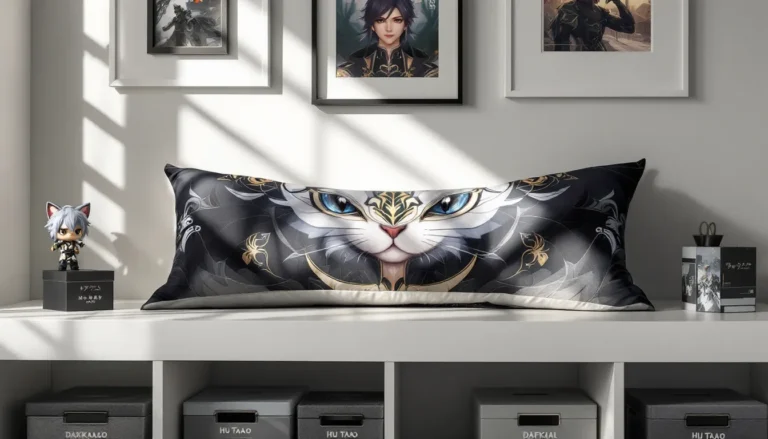
Studying Genshin Impact body pillow designs and merchandise art gives you insight into how professional artists simplify and emphasize character-defining elements. Official merchandise often shows characters from multiple angles, which helps you understand the three-dimensional form underlying your flat drawing.
When tackling detailed outfits, block in basic clothing shapes first. Then, gradually add folds, decorative patterns, and accessories. Layer your details, don’t try to finish one button before moving on. Building everything to similar completion levels helps you maintain proportion and balance.
Advanced Techniques For Enhancing Your Genshin Impact Artwork
Once you’re comfortable with basic character drawing, these advanced techniques elevate your work from solid to stunning.
Perspective And Pose Variation Methods
Most beginner drawings feature characters standing upright facing the viewer. Dynamic poses and varied perspectives make artwork memorable. Three-quarter views (neither front nor side, but between) feel more interesting than strict front-facing poses. To construct these, angle your proportion lines slightly rather than keeping them perfectly vertical. This simple adjustment creates dimension.
Foreshortening, when limbs point toward the viewer, tricks the eye into three-dimensionality. If a character is leaping toward the viewer, their legs appear shorter (because they’re pointing away) while their torso fills the frame. This is challenging but incredibly impactful.
Action poses require understanding how gravity and momentum affect the body. When a character lunges, the body leans into the movement: the extended leg straightens while the back leg bends. The torso twists, arms counter-balance. Study dynamic game screenshots or promotional art, notice how characters never stand perfectly upright in promotional material because it’s boring.
To practice pose variation, sketch the same character in multiple poses. Lumine holding her sword differently, Kazuha in different stances, repetition teaches you how the skeletal structure enables movement. Draw from imagination occasionally, not always from reference. This forces you to understand anatomy rather than copying shapes.
Background Integration And Environmental Context
Characters isolated on blank backgrounds feel flat. Backgrounds provide context and atmosphere. You don’t need photorealistic environments, even simple backgrounds significantly enhance artwork.
Depth layering is fundamental. Establish a focal point (usually your character), then create layers behind them: a foreground (closest), middle ground, and background (farthest). Objects farther away are smaller, less detailed, and desaturated (less colorful). This creates atmospheric perspective, the eye naturally reads distance from these visual cues.
For a Pyro-focused character like Amber, a warm-toned background with distant mountains feels fitting. For Cryo characters like Ayaka, a cooler palette with icy elements reinforces the theme. Environment tells story.
You can reference specific Teyvat regions. A Mondstadt character might be set against windmills and green hills. An Inazuma character benefits from torii gates and sakura trees. Exploring Genshin Impact’s diverse regions (available through guides and coverage) gives you thematic direction.
Simple backgrounds might include: light gradient (solid color fading darker or lighter), simple shapes (bokeh circles for a soft focus), or stylized elements (geometric patterns, floating particles). These don’t demand detailed rendering but add visual interest.
When adding backgrounds, keep the character as the clear focal point. The background should complement without competing. Warmer or more saturated colors on the character: cooler or desaturated backgrounds. Higher contrast on the character: softer contrast in the background. These choices guide the viewer’s eye.
Common Mistakes To Avoid When Drawing Genshin Impact Characters
Learning is faster when you understand common pitfalls. Here’s what trips up most artists drawing Genshin characters:
Ignoring proportions. Genshin characters follow consistent rules about head-to-body ratio and feature placement. Ignoring these makes characters feel “off” even if they’re technically well-drawn. Proportion mistakes are often the difference between amateur and polished work.
Over-rendering details too early. Jumping straight to shading and details without establishing proportions is backwards. Every experienced artist sketches first, refines second, then adds details. Starting detailed makes corrections exponentially harder.
Making eyes too small or placing them incorrectly. The eyes are the character’s soul. Too-small eyes feel lifeless. Incorrect spacing breaks symmetry. Eyes deserve extra attention, they’re worth redrawing multiple times if needed.
Inconsistent line weight. Line weight conveys form and depth. Outer edges should be darker/thicker than interior lines where forms connect. Uniform line weight everywhere feels flat and amateur. Vary intentionally.
Neglecting the character’s unique features. Every Genshin character has defining traits. Fischl has Oz (her raven), Kazuha has his maple leaves, Nahida has her unique hair ornaments. Omitting these makes the character unrecognizable. Reference art should constantly inform your work.
Using brown or black for shadows instead of cool tones. This is the fastest way to make artwork feel muddy. Genshin’s vibrant style relies on color harmony. Shadows should be desaturated versions of the base color or shifted toward cool tones (purples, blues). This maintains the character’s color integrity.
Forgetting about core anatomy. You don’t need to draw every muscle, but understanding skeletal structure underneath prevents proportional disasters. Characters should feel like they could actually move and balance. Anatomy isn’t rigid rules, it’s the framework that makes stylization believable.
Hair falling flat. Hair gets forgotten too often. It’s one of the first things viewers notice but frequently left as an afterthought. Invest time in hair structure, shading, and highlights. Clean shine lines and proper shadow placement make hair instantly more three-dimensional.
Asymmetrical faces without intention. Minor asymmetry is fine and realistic, but major mistakes (one eye far larger, misaligned jawline) look unintentional. Use guidelines, measure twice, and don’t erase your center line until you’re confident everything aligns.
Inconsistent art style. Genshin art has a specific look. Semi-realistic anatomy paired with stylized features. Some areas highly rendered, others simplified. Mixing realism and stylization without intention feels confused. Study the official style and commit to it, or intentionally reinterpret it.
Sharing And Improving Your Genshin Impact Art
Creating art teaches you something, but sharing and iterating teaches you everything. Put your work out there.
Social platforms matter. Reddit’s r/Genshin_Impact and r/characterart have active communities. Discord servers dedicated to Genshin art offer feedback loops. Twitter and Instagram algorithms favor art content, and the Genshin community is active there. Post regularly, consistency builds an audience.
Request feedback specifically. Rather than just uploading, ask: “Does the proportions feel right?” or “How can I improve the hair shading?” Specific questions get specific answers. Generic “thoughts?” questions get unhelpful responses.
Study improvements from others. When you see Genshin art you love, analyze it. What makes it work? How’s the color palette chosen? Where are the highlights? Is it stylized or realistic? This active observation accelerates your development faster than any tutorial.
Redraw old work. Revisit a drawing you made six months ago and remake it now. The comparison is eye-opening. You’ll see improvements you’ve made instinctively. This builds confidence and motivation to keep improving.
Engage with the community. Comment on others’ work, share reference materials you find useful, create drawing tutorials for techniques you’ve mastered. Community participation doesn’t just feel good, it keeps you connected to your “why” for drawing.
Study more reference material. Professional reviews and guides often break down character design. Game development talks occasionally discuss character aesthetics. Learning how pros approach the craft informs your own work. The gaming community widely discusses what makes a character visually compelling, tap into those conversations.
Be patient with progress. Improvement isn’t linear. You’ll hit plateaus where work doesn’t feel like it’s improving. That’s normal and temporary. Consistency matters more than talent. Artists who draw regularly always progress: those who wait for inspiration often stall. Draw daily if possible, even 30 minutes accumulates exponentially over weeks and months.
Consider art challenges. “Inktober,” character design challenges, and community events gamify practice. They provide structure and motivation. Participating pushes you outside your comfort zone and exposes you to different techniques.
Conclusion
Drawing Genshin Impact characters is a rewarding journey that combines technical skill with creative expression. Whether you’re sketching with pencil or using digital tools, the fundamentals remain constant: proportion, anatomy, feature placement, and intentional shading separate amateur work from polished art.
Start simple. Pick one character, understand their proportions and distinctive features, and draw them multiple times. Embrace mistakes as learning opportunities, every failed attempt teaches you something about anatomy, line weight, or color theory. As your foundational skills solidify, push into dynamic poses, complex clothing, and atmospheric backgrounds.
The Genshin community celebrates artists at every level. Share your work, engage with feedback, and keep improving. Consistency matters far more than natural talent. Artists who draw regularly always progress: those waiting for perfection before sharing often never start.
Genshin’s vibrant, stylized aesthetic is uniquely learnable. The characters’ consistent design rules mean lessons from one character transfer to others. By the time you’ve drawn five characters thoroughly, you’ll understand the underlying principles well enough to tackle anyone in the game. That’s when drawing shifts from following steps to expressing your own artistic voice while maintaining the style’s integrity.
Grab your tools, digital or traditional, pick your favorite character, and start sketching. Your first attempts won’t be perfect, but they’ll be yours. That’s where growth begins.