

Table of Contents
ToggleTeyvat is more than just a game world, it’s a living, breathing continent that expands with every patch and region HoYoverse releases. Whether you’re a newcomer just stepping off the boat in Mondstadt or a veteran who’s cleared every chest in Fontaine, understanding the layout, lore, and mechanics of Teyvat directly impacts how you approach exploration, character building, and endgame content. As of Version 5.5 in 2026, the world map now spans seven fully playable nations, each with unique environmental puzzles, enemy types, and story significance. This guide breaks down everything you need to know about navigating Teyvat, from fast travel systems and hidden collectibles to the ancient history powering every elemental reaction under your fingertips.
Key Takeaways
- Teyvat features seven fully playable nations, each with unique environmental puzzles, enemy types, and elemental mechanics that directly impact exploration strategy and character building.
- Understanding elemental reactions—Pyro + Cryo = Melt, Hydro + Electro = Vaporize, Dendro + Hydro = Bloom—is essential for solving puzzles and optimizing team composition for endgame content.
- Fast travel via Teleport Waypoints is your primary movement tool; prioritize unlocking waypoints on high points first to scout terrain and locate hidden chests across Teyvat.
- Reputation progression in each region unlocks critical rewards including specialty materials, recipes, blueprints, and access to world quests that reveal significant lore and story context.
- World quests should not be skipped as they contain the majority of Genshin Impact’s storytelling, lore expansion, and reputation earnings—making them essential for long-term engagement with Teyvat.
- Khaenri’ah remains unreleased as the seventh nation, but completion of existing regions’ exploration and lore quests provides the foundation for future content and the overarching narrative arc.
What Is Teyvat? Understanding Genshin Impact’s Central Setting
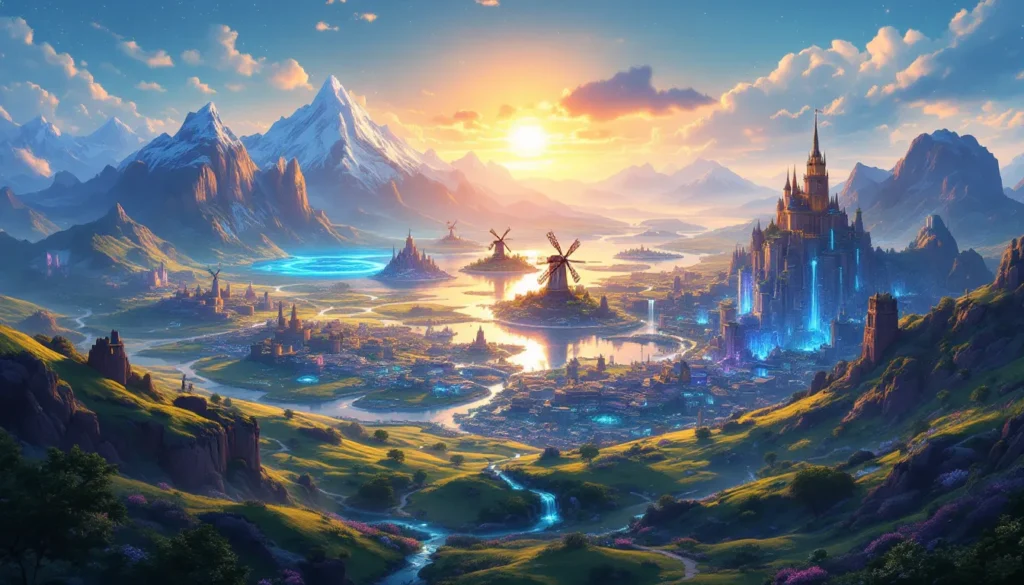
Teyvat is the primary overworld in Genshin Impact, a fantasy realm where seven nations coexist under the guidance of corresponding Archons. Think of it as the physical stage for every battle, story quest, and world puzzle you’ll encounter. The continent isn’t randomly generated: every mountain, river, and ruin placement serves narrative or mechanical purpose.
The world operates on a scale that rewards both rushing through content and spending weeks combing for hidden details. Fast travel is nearly instant thanks to teleport waypoints, but the real experience comes from walking through valleys, scaling cliffs, and discovering chests tucked behind environmental puzzles. The game’s elemental system ties directly into Teyvat itself, burn grass with Pyro, freeze water with Cryo, activate plant mechanisms with Dendro. Understanding Teyvat’s geography means understanding how to solve its challenges.
What makes Teyvat distinct from other open-world games is how deliberately HoYoverse designs each region. There’s no filler space, not every zone is populated with enemies, but every zone contains something worth finding. This design philosophy shapes how you should explore: move deliberately, test environmental interactions with your active party, and always climb high peaks to mark teleport points and scan the landscape for chests.
The Seven Nations of Teyvat: A Regional Breakdown
Mondstadt: The City of Freedom
Mondstadt is your starting region and the nation of Anemo (wind), ruled by Barbatos, the Archon of Freedom. It’s a Germanic-inspired landscape dominated by rolling green plains, windmills, and the iconic Favonius Cathedral at its center. Combat-wise, Mondstadt teaches you the basics: Anemo Slimes are weak to Pyro, Hilichurls vary by weapon type, and environmental wind currents require understanding of elemental applications.
The region’s puzzles emphasize Anemo mechanics, you’ll solve wind seals, activate pressure plates using momentum, and use Anemo characters to glide from high points. Newcomers often miss that Mondstadt’s full map extends further than the immediate starting zone. Explore outward from the cathedral, and you’ll find domains (dungeons) that drop vital artifacts and weapon materials for early-game progression.
Key Collectibles: Anemoculus (purple floating orbs) scattered throughout. Grab 40 of them to unlock chests and increase your stamina pool, which is crucial for early climbing and gliding.
Liyue: The Harbor of Stone
Liyue represents Geo (earth) and is ruled by Rex Lapis, the Archon of Contracts. Inspired by ancient China, this region features dramatic cliffs, merchant ports, and intricate cave systems. The capital city Liyue Harbor is the game’s hub for alchemy, talent books, and weapon enhancement, more important than you might think early on.
Geologically and narratively, Liyue is where the game’s story deepens. The Chasm (a massive underground network) contains some of the game’s most challenging combat encounters and lore-heavy world quests. Geo puzzles here involve moving stone blocks, activating pressure plates, and using Geo constructs (bridges, platforms) to navigate impossible terrain.
Liyue also introduces the Spiral Abyss domain, which is the game’s primary endgame challenge. If you plan to tackle high-level content, expect to farm Liyue domains heavily for artifacts and materials.
Key Collectibles: Geoculus (orange orbs). Like Anemoculus, collecting these permanently boosts your stamina. The Chasm specifically contains many hidden Geoculi behind combat encounters.
Inazuma: The Electro Archipelago
Inazuma is the nation of Electro, ruled by Ei, the Archon of Eternity. It’s a Japanese-inspired archipelago split across multiple islands. Getting there requires completing Liyue’s story quests and a specific world quest, this is the game’s first hard progression gate. The islands are connected by water and bridges, making exploration feel more vertical and interconnected than previous regions.
Electro puzzles dominate here: thunder seals, Electrogranum mechanics (special resonators that let you pass through electrified areas), and Electro-exclusive obstacles. The enemies in Inazuma are notably harder than Liyue, Electro Fatui Agents and Inazuma’s regional boss (Thunder Manifestation) demand solid team building and DPS optimization.
One critical note: Inazuma introduced the Reputation system. Leveling Inazuma’s reputation unlocks blueprints for gadgets, special recipes, and access to world quests that reveal significant lore. Don’t skip this, it gates quality-of-life improvements.
Key Collectibles: Electroculus (blue orbs). These are trickier to find than previous collectibles: many are locked behind time-limited world quests or high-damage environmental puzzles.
Sumeru: The Rainforest Sanctuary
Sumeru is Dendro (nature) territory, ruled by Lesser Lord Kusanali, the Archon of Wisdom. Released in Version 3.0, this region is one of the largest landmasses in Teyvat and fundamentally changed how players approach puzzles and combat. The aesthetic is South Asian–inspired rainforest, featuring bioluminescent plants, hidden temples, and dense jungle terrain.
Dendro is the newest element in the game’s reaction system, and Sumeru’s design demands you learn Dendro applications immediately. The region features Dendro core mechanics (where Dendro + Hydro creates exploding seeds), environmental plant growth puzzles, and puzzles that specifically require Dendro characters. If your roster lacks Dendro units, Sumeru becomes genuinely difficult to explore efficiently.
The Underground Mines below Sumeru contain some of the game’s most rewarding secret chests and weapon blueprints. These require patience and systematic mapping, bring characters with ranged attacks and healing.
Key Collectibles: Dendroculus (green orbs). Finding all of them (still being added in patches) permanently increases your stamina further. Several are locked behind world quests tied to the main Archon quest line.
Fontaine: The Land of Justice
Fontaine represents Hydro (water) and is ruled by Neuvillette, the current Hydro Archon. Released in Version 4.0, this region is inspired by French architecture and features underwater exploration as a core mechanic, a first for Genshin Impact. The capital Fontaine City is stunningly detailed and serves as the story hub for the region’s main quests.
Underwater puzzles and combat are unique here. You’ll need characters with ranged attacks and elemental applications that work when submerged. The region also introduces Fontaine’s special mechanic: Pneuma/Ousia resonators that create environmental puzzles requiring specific interaction patterns. Some chests are intentionally locked behind multi-step puzzles that take 10+ minutes to solve.
Fontaine represents a significant difficulty spike in exploration puzzles compared to earlier regions. If you’re struggling, it’s not a personal failure, HoYoverse deliberately increased complexity here. Take your time, use online guides for specific chests if needed (no shame in it), and focus on main story progression first.
Key Collectibles: Hydroculus (blue water-themed orbs). Several are underwater or locked behind combat encounters with Hydro-Heavy enemy configurations.
Natlan: The Nation of Pyro
Natlan is the Pyro (fire) nation, ruled by Mavuika, the Archon of War. This region launched in Version 5.0 and features Mesoamerican-inspired architecture mixed with dynamic combat-focused encounters. Natlan is notably different from other regions in that Flame Manes (friendly fire spirits) can be captured and used to solve puzzles, a mechanic entirely unique to this region.
The region’s design emphasizes team composition flexibility. Natlan’s puzzles often require multiple elemental interactions in sequence, forcing you to think beyond single-element solutions. Combat encounters here are aggressive and frequently spawn multiple elite enemies, making them harder than most overworld content.
Natlan also introduced Nightsoul mechanics (a region-specific currency that powers special abilities). This, combined with Flame Manes, makes the region feel mechanically distinct. If you’re newer to the game, exploring Natlan might feel overwhelming, that’s intentional. The game is scaling its difficulty up for veteran players.
Key Collectibles: Pyroculus (red orbs, continuing the pattern). Many are intentionally placed in combat-heavy areas or locked behind environmental puzzles that require precise elemental sequencing.
Khaenri’ah: The Unreleased Nation
Khaenri’ah doesn’t exist as a playable region yet, even though being heavily referenced in lore and world quests. This nation appears as a unreleased destination in various story elements and background references. Based on narrative hints, Khaenri’ah will be the seventh and final nation in Teyvat’s release roadmap, though HoYoverse hasn’t announced a release date as of early 2026.
What we know from lore: Khaenri’ah was destroyed during the Cataclysm (a catastrophic event 500 years before the game’s timeline). The nation was technologically advanced, weaponizing constructs and machines. The Abyss Order, one of the game’s primary antagonists, originates from Khaenri’ah. Story quests and world quests regularly drop lore hints about this nation’s history, but no playable content exists yet.
Patience is the name of the game here. When Khaenri’ah releases, expect it to be narratively significant and mechanically complex, drawing together all major story threads established across other nations.
Exploring Teyvat: How to Navigate and Uncover Hidden Secrets
Fast Travel and Waypoints
Fast travel is your primary movement tool across Teyvat. Every region contains Teleport Waypoints, statues shaped like stylized elements or landmarks. Once you’ve visited a waypoint, it’s permanently unlocked, letting you teleport there instantly. You can activate waypoints just by walking near them: there’s no unlock cost or cooldown between teleports.
Strategy tip: On first exploration of a new region, prioritize unlocking waypoints on high points (mountain peaks, towers). This gives you a bird’s-eye view of terrain and chests below. Use climbing stamina sparingly early on, waypoints solve most travel problems.
Secondary travel includes Stamina-based climbing and gliding (unlocked early via story), elemental movement skills (some characters teleport or dash with special mobility), and seven statues scattered across Teyvat that offer regional teleportation when activated. Statues are rare but game-changing if you find them early.
Puzzles, Chests, and Collectibles
Chests in Teyvat fall into distinct categories, each with specific solutions:
- Common Chests: Found in plain sight or solved by simple combat. Reward: 5-25 Primogems and basic materials.
- Exquisite Chests: Require multi-step puzzles, activate three pressure plates, light torches, or defeat nearby enemies. Reward: 50 Primogems, weapons, and artifacts.
- Precious Chests: These are the real challenges. They demand specific elemental sequences, timed puzzles, or combat with elite enemies. Reward: 100 Primogems, 4-star artifacts, and weapon materials.
- Luxurious Chests: The rarest type, sometimes appearing as story rewards or deep in dungeons. Reward: Up to 200 Primogems and guaranteed 4-star items.
Hidden chests often hide behind invisible walls or beneath water. Test environmental interactions constantly: burn grass to reveal passages, freeze water to walk across lakes, use Electro on metal mechanisms. The game rarely explains puzzle solutions directly, trial and error is intentional game design.
Pro tip: Use websites like an interactive Teyvat map to hunt specific chest types. But don’t just jump to coordinates, read the puzzle description and attempt it yourself first. The satisfaction of solving a chest puzzle manually is why many players explore Teyvat for 200+ hours.
Domain Locations and Dungeons
Domains are instanced dungeons (separate from the open world) that drop specific materials: artifacts, weapon enhancement stones, character talent materials, and boss materials. They’re essential for character progression and appear in every region.
Each domain has multiple difficulty tiers:
- Beginner & Intermediate: For early-game farming. Enemies have low HP, minimal aggression.
- Hard: Mid-game progression. Enemies hit harder, use elemental attacks, and require specific team compositions.
- Abyssal: Late-game/endgame content. Enemies are elite variants with high HP and aggressive patterns. You must have built DPS units to complete these efficiently.
Domain layout varies, some are straightforward combat rooms, others feature platforming or environmental puzzles between fights. The Spiral Abyss (Liyue’s endgame domain) deserves special mention: it’s a 12-floor challenge with rotating enemies and elemental requirements. Clearing Abyss rewards Primogems, Mora (in-game currency), and prestige. Most players can clear floors 1-8 with solid teams: floors 9-12 demand optimization.
World Bosses also appear across Teyvat. These are optional encounters that drop weekly materials needed for ascending characters. Unlike domains, world bosses appear in the overworld, making them free but requiring you to travel and manage combat timing (they respawn every 3 days). Knowing their locations and attack patterns saves serious time.
The Lore Behind Teyvat: Archons, Elements, and Ancient History
The Seven Archons and Their Roles
Teyvat operates under the rule of seven Archons, gods chosen by Celestia (the higher cosmic authority). Each Archon rules one nation and embodies one of seven elements: Anemo (wind), Geo (earth), Electro, Dendro (nature), Hydro (water), Pyro (fire), and Cryo (ice).
Here’s the current lineup as of 2026:
- Barbatos (Anemo): Ruled Mondstadt for millennia, present-day fate unknown after recent story developments.
- Rex Lapis (Geo): Retired from direct rule: Liyue is now governed by human merchants and adepti (immortal beings).
- Ei (Electro): Rules Inazuma through isolation and strict decree. Story arc heavily features her character development.
- Lesser Lord Kusanali (Dendro): New Archon, relatively weak compared to predecessors. Fontaine’s main quest explores her origin and trials.
- Neuvillette (Hydro): Current Hydro Archon. His character quest and Fontaine’s main arc reveal controversial truths about Celestia.
- Mavuika (Pyro): Latest Archon introduced in Version 5.0. Her relationship with Natlan’s people is unique, she exists as a warrior guiding the nation rather than a distant deity.
- The Seventh Archon: Unknown. Khaenri’ah’s ruler hasn’t been revealed.
Archons matter narratively, their story quests unlock lore cutscenes and character development that contextualizes world quests and boss fights. Some players skip Archon quests, but you’ll miss significant story beats. New players should prioritize main story over side content, but don’t ignore Archon quests once available.
The Vision System and Elemental Powers
Visions are crystallized elemental powers given to mortals by Celestia. Every playable character wields a Vision, which grants them control over one element. This isn’t just flavor, the Vision system creates the game’s core mechanical depth.
Elements interact through reactions:
- Pyro + Cryo = Melt (multiplies Cryo damage) or Reverse Melt (multiplies Pyro damage). Crucial for DPS scaling.
- Hydro + Electro = Vaporize (multiplies Hydro damage) or Reverse Vaporize (multiplies Electro). The most consistent damage amplifier in-game.
- Dendro + Hydro = Bloom (creates Dendro cores that explode, dealing AoE Dendro damage). Highest single-target DPS in current meta.
- Dendro + Electro = Aggravate (multiplies Electro damage). Dominant for Electro DPS characters like Fischl.
- Electro + Pyro = Overload (creates explosions knocking enemies back).
- Hydro + Cryo = Freeze (immobilizes enemies). Essential for crowd control.
Understanding reactions is mandatory for high-level play. The Genshin Impact main character can resonate with multiple elements, making them flexible for testing team compositions and learning reactions in the early game.
Visions also tie into world lore. Characters receive Visions from Celestia as recognition of their determination or ambition. Some characters lose their Visions (called Vision Extinction), a plot point in recent story arcs. The Vision system is central to why characters are special and why the story of Teyvat matters beyond generic fantasy.
Ancient Civilizations and Remnants
Teyvat’s history stretches back millennia, with multiple civilizations rising and falling. The most significant event is the Cataclysm (500 years before the game timeline), where Khaenri’ah was destroyed and the Abyss Order emerged. This catastrophe fundamentally reshaped Teyvat’s political landscape.
Before the Cataclysm, Khaenri’ah was technologically advanced, wielding Ruin Guardians (ancient mechanized enemies still found throughout Teyvat). Khaenri’ah’s destruction created the Abyss, a parallel dimension housing hostile entities and corrupted humans. The Abyss Order, led by the Sustainer of Heavenly Principles, directly opposes player characters and pushes multiple story arcs.
Additional ancient civilizations include:
- Celestia: The divine realm above Teyvat, ruled by the Heavenly Principles. It’s not a playable region and likely will never be, the story positions Celestia as untouchable and possibly antagonistic to player goals.
- The Adepti Civilization: A pre-human society that ruled parts of Teyvat. Relics appear in Liyue, and surviving adepti (like Xiao and Zhongli) are major characters.
- Ancient Mondstadt: Predated modern Mondstadt. Ruins scattered throughout Mondstadt contain lore fragments and enemy spawns.
World quests throughout Teyvat gradually reveal this lore. Side quests aren’t filler, they’re the game’s primary storytelling tool for world-building. If you’re interested in lore, complete world quests before moving on. Pathepic’s Genshin Impact Official Art sometimes contextualizes lore through character design and historical references.
One crucial lore point: The Heavenly Principles actively oppose player characters. Recent story arcs suggest that humanity’s resistance to Celestian control is the driving conflict of the overarching narrative. This makes Teyvat’s future genuinely uncertain, the game may not end with a “happy” resolution for all factions.
Teyvat’s Economy and NPC Communities
Merchant Hubs and Trading
Teyvat isn’t just geography, it’s an economy. Every major city (Mondstadt, Liyue Harbor, Inazuma City, Sumeru City, Fontaine City, Natlan) has merchant NPCs who buy and sell goods. Understanding who sells what saves massive time and Mora (in-game currency).
Key Merchants:
- Alchemy Benches: Found in every main city. Buy materials here to craft potions, food, and gadgets. Some recipes require rare materials, don’t overspend early.
- Souvenir Shops: Every region has one. These sell regional specialty materials (needed for character ascension) using currency earned from Reputation leveling. Prioritize buying specialties if you’re building characters from that region.
- Blacksmiths: Found in Mondstadt, Liyue, Inazuma, and Sumeru. They craft and enhance weapons, costing Mora and weapon materials. Early-game weapons (2-stars and 3-stars) are affordable: 4-star weapons demand serious resource investment.
- Talent Book Suppliers: Each city sells talent materials needed to upgrade character abilities. They rotate daily, plan your farming accordingly.
Mora is the primary bottleneck in mid-to-late game progression. You’ll need millions of Mora to level characters, weapons, and artifacts to endgame standards. The best Mora farming domains appear in every region at higher difficulty tiers. Don’t waste Mora on low-priority upgrades early, save it for your core DPS characters.
Reputation Systems and Unlockables
Reputation is a regional progression system unique to each region (Mondstadt, Liyue, Inazuma, Sumeru, Fontaine, Natlan). Leveling Reputation unlocks recipes, blueprints, and special rewards tied to that region.
You earn Reputation by completing world quests, defeating world bosses, and opening chests. Progress is visible in each region’s Adventurers’ Guild outpost. Reputation tiers go up to level 10 (some regions now go beyond, but the core reward structure peaks at 10).
Key Unlockables per Region:
- Mondstadt: Gliding challenges, special recipes, Anemoculus farming quests.
- Liyue: Fishing system unlocks, special recipes, treasure hunting quests.
- Inazuma: This is critical. Reputation unlocks access to world quests that reveal major lore and provide pullable 4-star weapons. Don’t skip this region’s reputation grind.
- Sumeru: Unlocks access to the Abyss of the Deep (high-reward endgame domain) and special exploration challenges.
- Fontaine & Natlan: Latest regions still expanding their Reputation reward structures in current patches.
Reputation is mandatory for efficient progression. Many players overlook this and struggle with resource bottlenecks later. Prioritize Reputation in whichever region contains characters you’re building, you’ll need their specialty materials.
World quests (not regular commissions) are the fastest Reputation earners. A single world quest grants 30-50 Reputation points. Completing a region’s world quests in a focused session can push Reputation from 0 to 5+ in a few hours. This investment pays dividends throughout the game.
Upcoming Content and Future Teyvat Expansions
As of early 2026, HoYoverse hasn’t confirmed release dates for Khaenri’ah (the seventh and final playable nation), but multiple data leaks and roadmap hints suggest it’s in active development. Based on the typical release cadence of one new nation every 1-2 years, Khaenri’ah could launch in late 2026 or early 2027.
Regional updates continue constantly. Existing nations receive new dungeons, world quests, and story content every 2-3 patches. Fontaine and Natlan are still receiving significant updates as recent additions. Even fully “complete” regions like Mondstadt and Liyue get surprise events and quests that expand lore or unlock new content.
Game mechanic expansions also shape Teyvat’s future. The Dendro element fundamentally changed puzzle design when introduced, expect similar mechanical shakeups. Rumors circulate about a Cryo nation redesign and new environmental mechanics tied to yet-unreleased regions.
One major uncertainty: Will more nations be added after Khaenri’ah? Celestia is explicitly not a playable region (per HoYoverse’s design philosophy), but whether additional unexplored lands exist remains speculation. The game’s story is approaching a major climactic arc, making the narrative endpoint unclear. This uncertainty is part of Genshin Impact’s appeal, the world feels alive and unpredictable.
For current players, focus on completing exploration in existing regions rather than waiting for new content. There are still hidden chests and world quests to discover in Natlan and Fontaine. Completionists should know that 100% exploration is nearly impossible without guides due to puzzle complexity and time-gated world quests, accept that some chests will require external resources to find efficiently.
HoYoverse’s latest gaming reviews and announcements sometimes feature Genshin Impact content drops and roadmap discussions worth following. Staying informed helps you plan which characters to build and when to expect farming windows.
Conclusion
Teyvat in 2026 is a world that rewards both casual exploration and deep engagement. Whether you’re collecting Oculus stones, solving complex environmental puzzles, or diving into lore hidden in world quests, there’s genuine depth beneath Genshin Impact’s free-to-play surface.
The key to enjoying Teyvat is understanding it’s a long-term experience. You won’t explore everything in a week, and that’s intentional. New regions arrive regularly, new lore constantly reframes existing understanding, and hidden secrets wait for players willing to test elemental interactions and climb every mountain.
Start with the main story, level your Reputation in regions where you’re building characters, and don’t skip world quests, they’re where the story actually lives. Use fast travel to maintain momentum and tools to solve puzzles methodically. Most importantly, take your time. Teyvat is designed to be savored, not speedrun. The world becomes more interesting the more you learn about it.